Streaming changed culture.
It should change education too.
Maya Higa built a wildlife sanctuary funded by streaming. Ms. Rachel taught millions of toddlers to talk. Hasan Piker made political education compete with entertainment. Meanwhile, some platforms optimize for crypto gambling ads and proliferate engagement bait. We're building streaming infrastructure for the public.
Watch Live →Content creators who changed their spaces
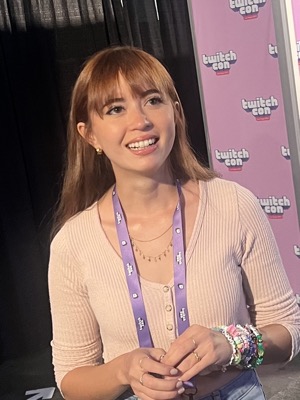
Maya Higa
Animal & Environmental ConservationFounded Alveus Sanctuary, a wildlife education nonprofit in Texas. Streams live from the sanctuary to teach conservation — reaching audiences that would never visit a zoo or read a textbook. Over $7.5M raised through streaming for animal rescue and habitat education. Donate to Alveus.
Wikipedia
Ms. Rachel
Early Childhood EducationRachel Griffin Accurso — a preschool music teacher who started posting educational videos for toddlers during the pandemic. Now reaches 10M+ subscribers with content designed around early childhood development research. Free, accessible, and replaces screen time that would otherwise be algorithmically optimized for engagement rather than learning.
Wikipedia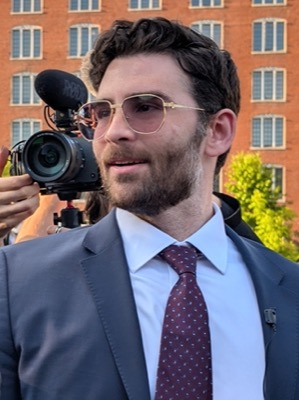
Hasan Piker
Political Education & NewsPolitical commentator who built one of the largest solo streaming audiences on Twitch — averaging 30,000+ concurrent viewers — by combining live news coverage with accessible political education. Demonstrated that long-form educational content can compete with entertainment for attention.
Wikipedia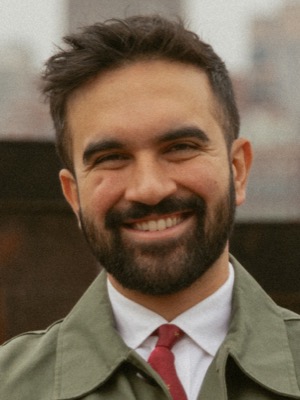
Zohran Mamdani
Civic Engagement & GovernanceWon the 2025 New York City mayoral election with 50.78% of the vote — the highest turnout for a city mayoral race since 1993. His campaign paired aggressive door knocking with high-delivery short-form social media (TikTok, Reels) that reached younger and first-time voters. Became the first Muslim and first South Asian mayor of NYC, and its youngest since 1892. His post-election Twitch town hall demonstrated streaming as a tool for accessible governance.
Wikipedia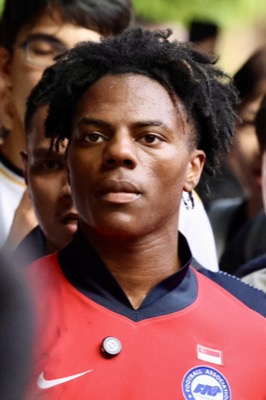
IShowSpeed
Travel & Cultural ExchangeBrought millions of viewers along on real-world travel experiences with an energy and authenticity that traditional travel shows cannot match. His audience experiences places they may never visit, with engagement metrics that dwarf conventional media. Demonstrates that streaming bridges physical inaccessibility — a student who cannot attend a field trip can still experience it live.
Wikipedia
arar — Audience-Directed Baking
Interactive Audience Participationarar baked a cake with his audience using a "click the screen" heatmap overlay. Viewers could click anywhere on the stream — the recipe (forcing him to re-read it no matter how many times they asked), drawers for utensils, into the oven, everywhere — and he followed their collective direction. A cake baked collaboratively by his audience directing his hands in his kitchen. This is the engagement model we build toward: educators streaming experiments where students vote on variables.
@Arar_VTThe default trajectory
Without intentional infrastructure to propagate useful content, the current implementation of these platforms encourages antisocial behavior, poor politics, atomizes our society, and creates division for clicks. The largest platforms optimize for watch-time, not learning outcomes — and the creators who thrive are the ones willing to sacrifice everything else for engagement.
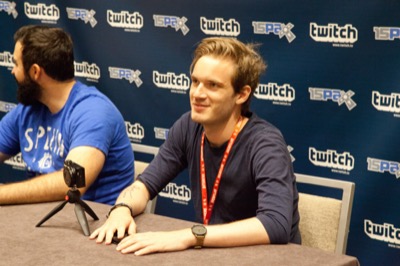
PewDiePie
Radicalization PipelineThe most-subscribed individual creator on YouTube for nearly a decade. Used racial slurs on stream, paid people to hold antisemitic signs "as a joke," and became a gateway figure in the alt-right pipeline — a term coined specifically to describe how his audience was funneled toward increasingly extreme content. The Christchurch shooter said "subscribe to PewDiePie" before his attack.
Wikipedia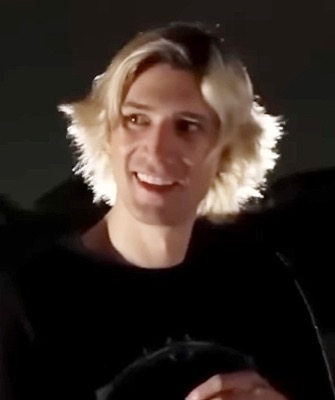
xQc
Gambling PromoterSigned a $100M deal with Kick.com — a platform funded by a gambling company — to stream gambling content to an audience skewing young and male. Multiple controversies around misogyny, with former partners describing abusive behavior on-stream. The economic incentives of streaming reward this: controversy drives clips, clips drive views, views drive sponsorships.
Wikipedia
Kick.com
Gambling-Funded PlatformA streaming platform funded by Stake.com (an online casino). Attracted creators banned from Twitch for harassment, hate speech, and sexual content by offering minimal moderation and gambling-funded contracts. The platform's economic model is straightforward: gambling companies need young eyeballs, and controversial streamers deliver them.
Wikipedia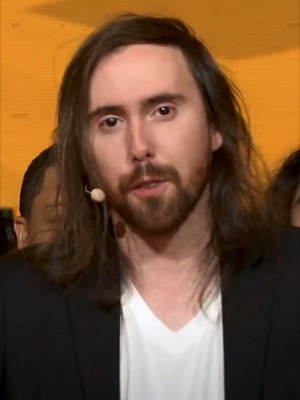
Asmongold
Reactionary GamerA World of Warcraft streamer who pivoted to political commentary without expertise, credentials, or accountability. His audience — built on gaming — was funneled into reactionary political content. Evidence of botted viewership inflating perceived influence. Demonstrates how gaming audiences are vulnerable to radicalization via parasocial trust.
Wikipedia
Nick Fuentes
White NationalistUsed podcast and streaming formats specifically as recruitment tools for white nationalist ideology, targeting young men through humor and irony as entry points. Demonstrated that long-form streaming is an effective radicalization medium when ungoverned. The format is identical to educational streaming — the governance is the differentiator.
WikipediaThe technology is the same. A camera, an encoder, a distribution network, an audience. What differs is who controls the infrastructure and what they optimize for. We're building streaming tools that optimize for educators — not advertisers, not gambling companies, not engagement algorithms.
How it can work in practice
Cannon Beach, Oregon — Tide Pool Education
At low tide, the city of Cannon Beach provides educators and conservationists to guide tourists away from sensitive ecosystems. Visitors are offered binoculars and a telescope to observe wildlife from a safe distance.
But this model has gaps. A visitor in a wheelchair may not be able to navigate the rocky terrain to get close to tide pools. Binoculars are difficult to angle from a seated position. Telescopes require physical adjustment that isn't always accessible.
One solution: a live camera positioned near the tide pools, streaming to a screen at an accessible viewing area. An educator directs the camera — pointing out puffins, starfish, anemones — while visitors watch in real-time from a comfortable, accessible location. This is the kind of deployment our platform enables.
Coachella — Live Event Streaming Infrastructure
Professional streaming infrastructure deployed at physical events — multiple camera angles, backstage content, artist interviews — all streamed live with interactive overlays and audience engagement.
One proposal: the same infrastructure that streams a concert can stream a science fair, a school play, or a community workshop. The technology is venue-agnostic; the governance model determines what content is appropriate. That's what we're building.
Evil Studio — Twitch Educational Streaming
Our own Twitch channel serves as the primary testbed for the streaming technology. Educational content — coding, system design, operations — streamed live with the tools we're building. The audience watches the product being built while simultaneously being the first users of its engagement features.
One proposal: every feature we build is tested live on our own stream first. The channel demonstrates the educational streaming model while providing real usage data, audience feedback, and a public record of development progress. This is the platform in action.
Interested in using the platform at your school or program? Get in touch.
Adopt the platform
Public investment in your community.
You subscribe. The money goes directly to content creators — educators, streamers, conservationists. No ad network taking 45%. No platform skimming to fund engagement algorithms. Just a direct market transaction: your money becomes someone's work.
With enough subscribers, we fund a wildlife educator in Oregon, a math tutor streaming from their kitchen, a community college broadcasting shop class. The more people buy in, the more problems get solved.
The return is a better community. Access to real, provable experts instead of influencers cosplaying as authorities. An audience that actually knows things. The kind of investment that compounds in ways a stock ticker can't measure.
Where the money goes.
Staff are paid by-the-minute for actual work performed. Not salaries — invoices. Open invoices. We discuss our standards of living publicly, and as public employees of this platform, our finances are up for scrutiny. Platform costs (servers, bandwidth, domains) are spared from the creator pool and documented line-by-line.
Right now, the founder takes $0. Everything goes to creators and infrastructure. When the platform sustains itself, staff invoicing begins — publicly, by the minute.
Radical transparency.
If you're paying for it, you get to see where it goes. All of it.
A note from the founder.
For now, I get nothing. Every dollar this platform earns on my behalf gets donated to charity. I have a day job that still wants me — for now. But AI might soon replace me, and honestly, the things you can accomplish now with a computer far outdoes any other point in history.
So I'm building this on the side, with tools that didn't exist two years ago, because the window is open and I don't know how long it stays open. When the platform sustains itself, I'll invoice for my time like anyone else — by the minute, publicly, with the same scrutiny as every other dollar. Until then, it costs me nothing but time, and time is the one thing I'm willing to bet.